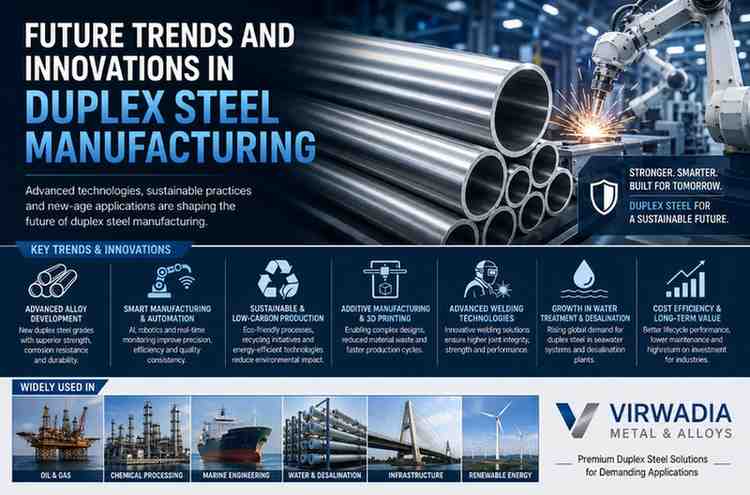
The global industrial sector is evolving rapidly, and materials used in engineering, infrastructure, energy, and manufacturing are evolving along with it. Among advanced industrial materials, duplex steel has emerged as one of the most preferred choices for industries requiring exceptional strength, corrosion resistance, and long-term durability.
As demand increases across sectors like oil & gas, marine engineering, desalination, chemical processing, and renewable energy, manufacturers are continuously improving duplex steel production technologies to meet modern industrial requirements.
Companies like Virwadia Metal & Alloys are helping industries access high-quality duplex steel products designed for challenging industrial environments and future-ready applications.
What Is Duplex Steel?
Duplex steel is a type of stainless steel that combines both ferritic and austenitic microstructures. This unique composition gives duplex steel superior mechanical strength and excellent corrosion resistance compared to many conventional stainless steel grades.
Industries widely use duplex steel for:
- Offshore structures
- Chemical processing plants
- Marine applications
- Heat exchangers
- Pressure vessels
- Pipelines
- Water treatment facilities
Its growing demand is driving innovation in manufacturing processes and alloy development worldwide.
Why Duplex Steel Demand Is Increasing
Modern industries require materials that can withstand harsh conditions while reducing maintenance costs and improving operational efficiency. Duplex steel meets these demands through:
- High strength-to-weight ratio
- Excellent resistance to stress corrosion cracking
- Long operational life
- Better fatigue resistance
- Improved cost efficiency over time
Global infrastructure expansion and energy sector growth are further accelerating duplex steel adoption. Industry reports project strong long-term market growth driven by infrastructure, desalination, oil & gas, and chemical industries.
Future Trends Shaping Duplex Steel Manufacturing
The duplex steel industry is undergoing major transformation due to technological advancements, sustainability goals, and changing industrial demands.
1. Development of Advanced Duplex Steel Grades
Manufacturers are continuously developing new duplex and super duplex steel grades with enhanced performance capabilities.
Future innovations focus on:
- Higher corrosion resistance
- Improved weldability
- Better heat resistance
- Enhanced mechanical strength
- Reduced material weight
New grades are specifically being designed for aggressive industrial environments such as offshore drilling, hydrogen infrastructure, and chemical processing plants.
2. Growth of Duplex Steel in Renewable Energy Projects
One of the biggest future growth areas for duplex steel is renewable energy infrastructure.
Industries increasingly use duplex steel in:
- Hydrogen production systems
- Offshore wind farms
- Solar energy plants
- Desalination facilities
- Green energy pipelines
Hydrogen infrastructure projects across Europe and other regions are already driving strong demand for duplex steel materials because of their corrosion resistance and long-term durability.
3. Smart Manufacturing and Automation
Modern duplex steel manufacturing is becoming more automated and digitally controlled. Advanced technologies are improving production precision, consistency, and efficiency.
Future manufacturing innovations include:
- AI-based quality control
- Automated welding systems
- Smart production monitoring
- Robotics in fabrication
- Predictive maintenance systems
Digital manufacturing technologies help reduce defects, improve productivity, and lower operational costs.
4. Sustainable and Low-Carbon Steel Production
Sustainability is becoming one of the most important priorities in the steel industry. Duplex steel manufacturers are increasingly investing in eco-friendly production methods.
Key sustainability trends include:
- Increased use of recycled materials
- Reduced carbon emissions
- Energy-efficient manufacturing plants
- Cleaner production technologies
- Waste reduction systems
New intelligent low-carbon stainless steel production facilities are helping manufacturers reduce environmental impact significantly.
5. Expansion of Additive Manufacturing and 3D Printing
3D printing technology is opening new possibilities in duplex steel manufacturing. Advanced additive manufacturing techniques allow industries to produce complex steel components faster and with greater precision.
Benefits include:
- Faster production cycles
- Reduced material waste
- Custom component manufacturing
- Improved design flexibility
- Lower production costs for specialized parts
Experts believe 3D printing will become increasingly important for heavy engineering and industrial fabrication applications.
6. Improved Welding and Fabrication Technologies
Historically, duplex steel required specialized welding processes. However, future innovations are making fabrication easier and more efficient.
Modern advancements include:
- Advanced laser welding
- Electric fusion welding (EFW)
- Enhanced heat control techniques
- Improved weld quality monitoring
These technologies improve strength, precision, and reliability in duplex steel fabrication.
7. Rising Use in Water Treatment and Desalination Plants
Water scarcity and increasing global desalination projects are creating strong future demand for duplex steel products.
Duplex steel performs exceptionally well in saltwater and chloride-rich environments, making it ideal for:
- Seawater pipelines
- Desalination plants
- Water treatment systems
- Marine processing equipment
Global desalination capacity expansion continues to drive growth in duplex steel pipe and tube applications.
8. Focus on Cost Efficiency and Long-Term Performance
Industries are increasingly prioritizing materials that offer lower lifecycle costs rather than just lower initial prices.
Duplex steel helps businesses reduce:
- Maintenance expenses
- Replacement frequency
- Downtime risks
- Corrosion-related failures
This long-term value is making duplex steel more attractive across industries worldwide.
Challenges Facing Duplex Steel Manufacturing
Despite strong growth, the duplex steel industry also faces several challenges:
- Fluctuating nickel and chromium prices
- Global supply chain disruptions
- High production complexity
- Environmental regulations
- Skilled labor requirements
Manufacturers continue investing in advanced technologies and localized production strategies to overcome these challenges.
Why Industries Trust Virwadia Metal & Alloys
Virwadia Metal & Alloys is known for delivering premium-quality duplex steel products suitable for demanding industrial applications.
Their duplex steel solutions are valued for:
- High corrosion resistance
- Superior durability
- Precision manufacturing
- Industrial-grade quality
- Reliable long-term performance
Whether for marine engineering, chemical processing, infrastructure, or energy applications, Virwadia Metal & Alloys provides dependable duplex steel materials designed to meet evolving industry standards.
Final Thoughts
The future of duplex steel manufacturing is being shaped by innovation, sustainability, automation, and growing industrial demand. As industries continue moving toward stronger, more efficient, and environmentally responsible materials, duplex steel is expected to play an even larger role in global infrastructure and engineering projects.
Advanced alloy development, smart manufacturing, renewable energy applications, and eco-friendly production methods are transforming the duplex steel industry for the future.
Businesses looking for reliable duplex steel products can explore high-performance solutions from Virwadia Metal & Alloys Duplex Steel Products to support modern industrial and infrastructure requirements.