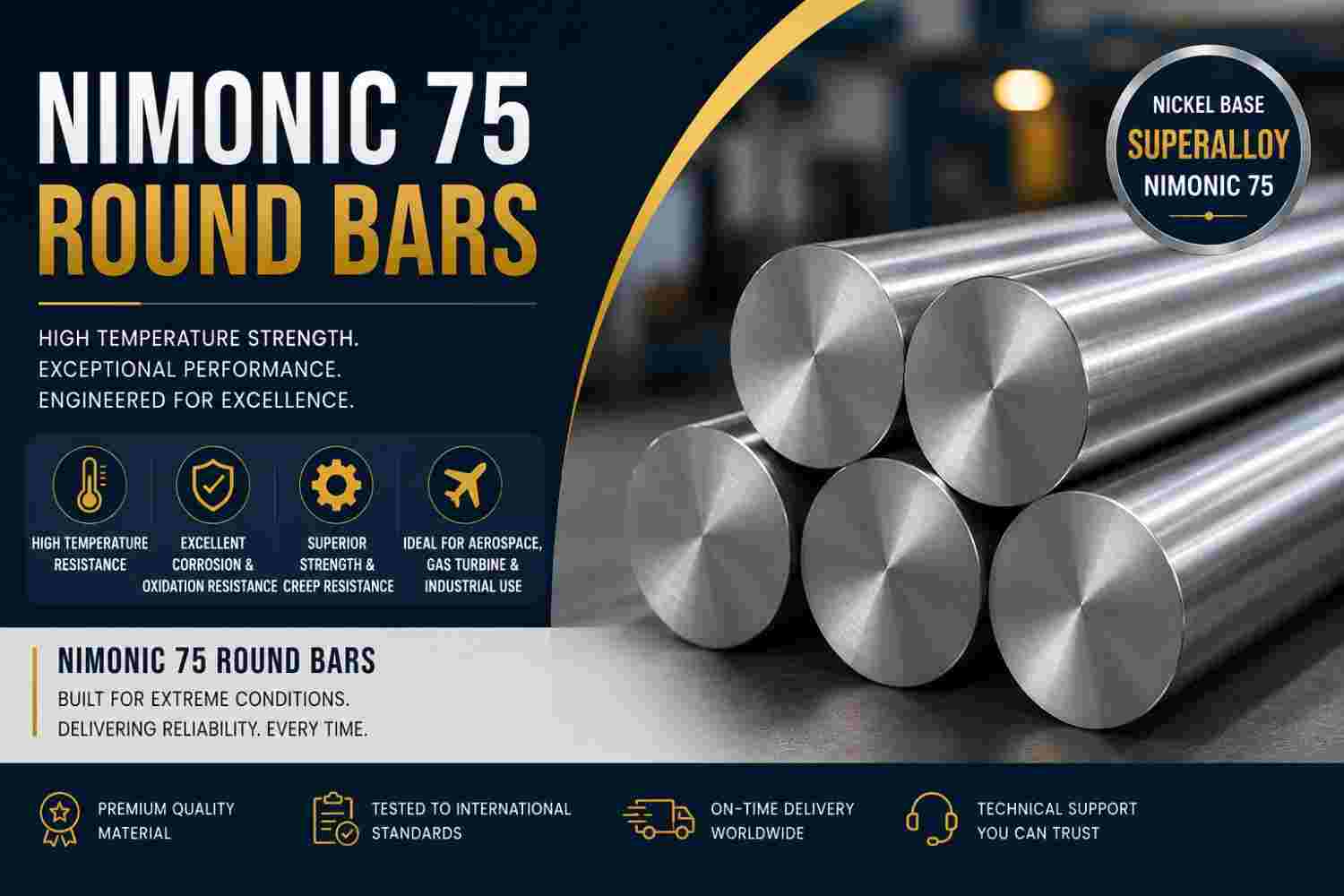
Nimonic alloys are nickel-based materials developed for applications where components must perform reliably under high temperatures, oxidation, and mechanical stress. Among these alloys, Nimonic 75 is widely used for components that require good resistance to heat and oxidation along with dependable mechanical performance.
For industries looking for reliable Nimonic 75 Round Bars Manufacturers, Virwadia Metal & Alloys provides alloy products suitable for demanding engineering and industrial applications.
What Is Nimonic 75?
Nimonic 75 is a nickel-chromium alloy known for its resistance to oxidation and good mechanical stability at elevated temperatures. Its combination of nickel and chromium makes it suitable for environments where conventional steels may experience excessive oxidation or deterioration.
The alloy can be supplied in different product forms depending on application requirements, including round bars, sheets, plates, wires, and strips.
Its properties make it useful in industries such as:
- Aerospace
- Power generation
- Gas turbines
- Heat treatment
- Industrial engineering
- High-temperature equipment manufacturing
Why Are Nimonic 75 Round Bars Used in High-Temperature Applications?
Why choose a nickel-based alloy instead of conventional steel?
The main reason is its ability to maintain useful mechanical and oxidation-resistant properties when exposed to elevated temperatures. Components used around engines, exhaust systems, heating equipment, and other thermal environments can experience continuous heat and thermal cycling.
Nimonic 75 can provide:
- Good oxidation resistance
- High-temperature stability
- Resistance to thermal deterioration
- Reliable mechanical performance
- Good dimensional stability
- Suitability for demanding engineering environments
These characteristics make the material appropriate for components that need consistent performance over extended operating periods.
What Makes Nimonic 75 Suitable for Aerospace Applications?
Aerospace components often operate under high thermal and mechanical loads. Materials used in these systems must withstand demanding operating conditions while maintaining their structural integrity.
Nimonic 75 is used for selected aerospace and engine-related components where its nickel-chromium composition and high-temperature oxidation resistance can provide useful performance.
Typical applications may include:
- Engine-related components
- Exhaust components
- High-temperature fasteners
- Heat-resistant parts
- Aerospace hardware
- Thermal protection components
Material selection should always be based on the applicable specification, operating temperature, mechanical requirements, and component design.
Where Are Nimonic 75 Round Bars Commonly Used?
Where can these bars be used outside aerospace?
They are suitable for manufacturing and machining components that operate in high-temperature or oxidation-prone environments.
Common applications include:
- Gas turbine components
- Exhaust systems
- Heat-treatment equipment
- High-temperature fasteners
- Industrial furnace components
- Power-generation equipment
- Engineering components exposed to elevated temperatures
The round-bar form is particularly useful for producing shafts, pins, fasteners, machined parts, and other cylindrical components.
What Are the Advantages of Using Nimonic 75 Bars?
What benefits can manufacturers expect from this alloy?
1. High-Temperature Performance
The alloy is designed for environments where elevated temperatures can affect conventional engineering materials.
2. Oxidation Resistance
Its chromium content contributes to the formation of a protective oxide layer, helping the material resist oxidation in suitable high-temperature environments.
3. Good Mechanical Stability
The material can maintain useful mechanical properties under demanding operating conditions, making it suitable for selected industrial components.
4. Machining Capability
Round bars can be machined into different component shapes and dimensions according to engineering requirements.
5. Industrial Versatility
The material can be used across aerospace, power, thermal processing, and general high-temperature engineering applications.
How Do You Select the Right Size of Nimonic 75 Round Bar?
Selecting the correct size depends on the component design and manufacturing process.
Before placing an order, buyers should consider:
- Required outside diameter
- Bar length
- Component dimensions
- Machining allowance
- Required surface finish
- Applicable material specification
- Heat-treatment condition
- Quantity required
For precision components, dimensional tolerances should also be confirmed before production or supply.
What Standards Should You Check Before Buying These Alloy Bars?
Material standards are important when purchasing products for critical applications.
Buyers should confirm the required ASTM, AMS, or other applicable specification before ordering. The specification should match the intended application and define requirements such as chemical composition, mechanical properties, dimensions, testing, and delivery condition.
For critical components, buyers can also request relevant inspection and material documentation.
How Does Quality Testing Improve Product Reliability?
Why is testing important for high-performance alloy products?
Testing helps verify that the supplied material meets the specified chemical, mechanical, dimensional, and quality requirements.
Depending on the product specification and application, quality checks may include:
- Chemical composition analysis
- Tensile testing
- Hardness testing
- Dimensional inspection
- Surface inspection
- Heat-treatment verification
- Material traceability
- Third-party inspection when required
Proper inspection is especially important when the material is intended for aerospace, power-generation, or other critical engineering applications.
Why Choose Virwadia Metal & Alloys for Nimonic 75 Products?
Virwadia Metal & Alloys supplies nickel-based alloy products for demanding industrial requirements. The company focuses on material quality, dimensional accuracy, documentation, and dependable supply.
As a Nimonic 75 Round Bars Supplier in Chennai, Virwadia Metal & Alloys can support requirements involving different sizes, quantities, and product forms, subject to specification and availability.
Customers can discuss their application, required dimensions, quantity, and applicable material standard with the technical team before placing an order.
What Industries Can Benefit From Nimonic 75?
Which industries commonly require nickel-chromium alloys for high-temperature service?
Several sectors can benefit from this type of material, including:
- Aerospace and aviation
- Gas turbine manufacturing
- Power generation
- Heat-treatment equipment
- Industrial furnace manufacturing
- Engineering and fabrication
- Energy-related equipment
The exact grade should always be selected according to the temperature, stress, corrosion environment, and design requirements of the application.
What Should You Ask a Manufacturer Before Ordering?
Before purchasing, buyers should ask the manufacturer or supplier about:
- Available dimensions
- Manufacturing specification
- Material grade
- Heat-treatment condition
- Testing certificates
- Surface finish
- Dimensional tolerances
- Quantity availability
- Packaging requirements
- Delivery schedule
Providing complete technical details at the quotation stage can help prevent material-selection and dimensional issues later.
Why Is Chennai an Important Location for Industrial Alloy Supply?
Chennai has a strong industrial ecosystem covering engineering, automotive, aerospace, manufacturing, fabrication, and power-related industries. This creates demand for specialized materials capable of handling demanding operating conditions.
Local availability from experienced Nimonic 75 Manufacturers in Chennai can help industrial buyers simplify procurement, discuss technical specifications, and arrange material according to project requirements.
Conclusion
Nimonic 75 is a nickel-chromium alloy suitable for selected applications involving elevated temperatures and oxidation. Its combination of high-temperature stability, oxidation resistance, and engineering versatility makes it useful for aerospace, power generation, thermal processing, and industrial applications.
Virwadia Metal & Alloys provides Nimonic 75 Round Bars and other alloy products for industrial requirements, with attention to specifications, dimensions, testing, and supply requirements. Buyers should provide their application details and applicable material standard to ensure the right product is selected for their project.